




Blog

The History of Bit2
Bit2 emerged at the intersection of two major shifts: Bitcoin’s evolution as a programmable settlement layer and the rise of autonomous agents as economic actors. Building on Fairgate’s work on trust-minimized Bitcoin infrastructure, Bit2 was designed from first principles to address the scalability, privacy, self-custody, and payment requirements of agentic commerce. Its history traces the path from BitVMX and client-side validation research to an open payment protocol built for the next generation of autonomous economies.

Comparison between Bit2 and other Payment Networks for Agentic Payments
Agentic commerce demands payment infrastructure that can combine reliability, scalability, privacy, low costs, and user control. This analysis compares Bit2 with Lightning, Base, Ark, RGB, and INTMAX2 across the properties that matter most for autonomous payments. By combining client-side validation, cryptographic state compression, and minimal L1 commitments, Bit2 is designed to overcome key trade-offs of existing architectures and provide a payment layer built specifically for large-scale agentic commerce.
Paywalls for the Agentic Web: Building an x402 Service on Bit2
HTTP's long-unused '402 Payment Required' status finally becomes practical for the agentic web when combined with Bit2. By providing instantly verifiable, non-interactive payment proofs, Bit2 enables pay-per-request APIs and digital services without payment processors, user accounts, or persistent payment channels. The result is a decentralized payment layer that allows autonomous agents to buy and sell digital resources in real time.
Extending Bit2 with Client-Side Smart Contracts
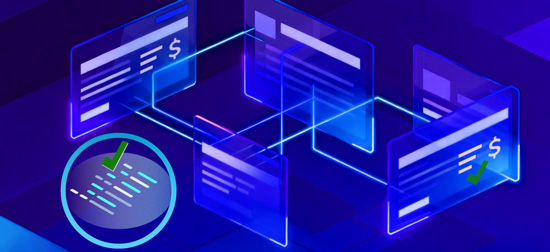
Programmable payment logic does not always need global blockchain execution. Bit2 extends client-side validation with lightweight smart contracts that let users define spending policies, authorization rules, and conditional payment workflows directly at the wallet level. This enables safer agentic payments, richer automation, and greater composability while preserving privacy, scalability, and self-custody.
Bit2: You Control Your Funds—No One Else
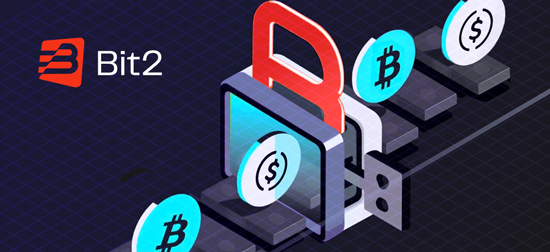
Self-custody goes beyond holding private keys: it means retaining full control over your funds under all conditions. Bit2 is designed around three complementary guarantees: unilateral access, uncensorable exits, and mass exit safety, ensuring users can continue transacting and recover their assets even during infrastructure failures or network-wide stress. By minimizing dependence on service providers, Bit2 preserves user sovereignty without compromising scalability or security.
Bit2 on EVM: A Milestone Towards Bit2 on Bitcoin
The long-term vision of Bit2 is clear: a scalable, peer-to-peer payment system with programmable privacy, secured directly by Bitcoin. However, deploying Bit2 on EVM-compatible Bitcoin layers first enables faster iteration, which is crucial to improve and harden the system. It also provides lower costs, and significantly higher throughput while preserving the protocol’s core principles of neutrality, privacy, and peer-to-peer verification. By leveraging environments such as Rootstock, Bit2 can support large-scale agentic commerce today, while advancing toward its long-term goal of becoming a fully Bitcoin-native payment system.
Bit2 Premise and Architectural Principles
Bit2 was designed from first principles to meet the requirements of agentic commerce. Rather than adapting existing blockchain architectures, it starts from a clear set of goals—including scalability, privacy, self-custody, low latency, and deterministic payments—and derives a payment network optimized for autonomous economic activity. These architectural principles define the foundation of Bit2 and shape every aspect of its design, from client-side validation to Bitcoin anchoring and cryptographic verification.

The Digital Cash Layer for Stablecoins
Stablecoins are becoming the preferred medium of exchange for agentic commerce, but existing payment systems often force a tradeoff between privacy and regulatory compliance. Bit2 removes this compromise by combining confidential transactions with issuer-controlled compliance tools and zero-knowledge proofs. The result is a stablecoin-native payment layer that enables private, scalable, and compliant digital commerce for both humans and autonomous agents.

To Be Lazy Is To Be Fast: Low Latency in Client-Side Validation
Low latency is essential for agentic commerce, where delays directly impact the efficiency of autonomous systems. Bit2 achieves sub-second payment assurances through bonded pre-confirmations and a 'lazy' validation model that defers expensive cryptographic operations outside the critical payment path. By combining credible guarantees with high-performance timestamping services, Bit2 delivers fast, secure, and privacy-preserving payments at the speed required by agent-driven economies.

Back to the Roots: Peer-to-Peer Payments
As digital commerce becomes increasingly automated, dependence on intermediaries creates growing friction, surveillance, and control over economic activity. Bit2 enables truly peer-to-peer payments by combining client-side validation with cryptographic timestamping, empowering users and autonomous systems to transact directly without exposing transaction data or relying on trusted operators. The result is a neutral and programmable payment layer that preserves privacy, autonomy, and freedom of exchange in agent-driven economies.

Faster than Lightning: Payment Channels on Top of Bit2
Verifiable payment proofs are essential for agentic commerce, where autonomous systems must independently confirm that transactions have occurred. Bit2 enables globally verifiable, non-interactive payment proofs, allowing both senders and receivers to prove payment acceptance and invoice fulfillment without relying on trust or coordination. This makes payments directly usable by agents, smart contracts, and external systems, supporting fully automated and reliable interactions at scale.
Agentic Commerce Requires Verifiable Payment Proofs
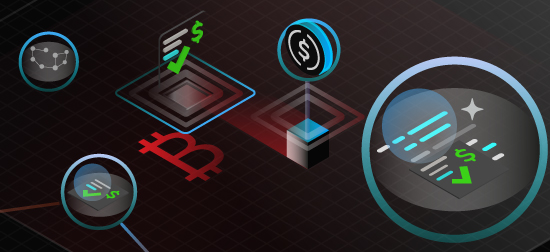
Verifiable payment proofs are essential for agentic commerce, where autonomous systems must independently confirm that transactions have occurred. Bit2 enables globally verifiable, non-interactive payment proofs, allowing both senders and receivers to prove payment acceptance and invoice fulfillment without relying on trust or coordination. This makes payments directly usable by agents, smart contracts, and external systems, supporting fully automated and reliable interactions at scale.
Bit2 and Transaction Cost for Agentic Commerce
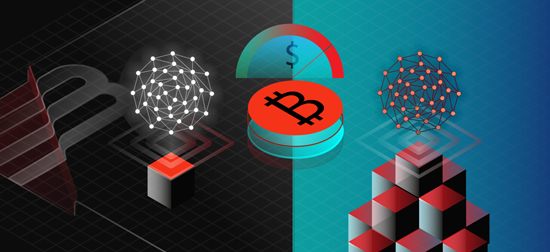
Transaction cost is a key constraint in agentic commerce, where even small inefficiencies can make high-frequency interactions economically unviable. Bit2 minimizes these costs by combining client-side validation with extreme data compression, reducing reliance on both L1 bandwidth and locked capital. By amortizing costs across large batches of transactions, it enables near-zero per-payment fees and supports scalable, low-cost agent-driven economies.

Bit2 Scalability – Throughput for an Agentic Future
Throughput is a critical constraint for agentic payments, where high-frequency and parallel transactions can quickly overwhelm traditional systems. Bit2 addresses this by combining client-side validation with batch time-stamping, enabling massively parallel execution without relying on liquidity, routing, or centralized sequencing. This allows the system to achieve high and predictable throughput, making it well-suited for large-scale agent-driven commerce.

Agentic Payments Must Not Require Liveness
Liveness requirements introduce a critical risk in payment systems, forcing users to stay online to protect their funds. Bit2 removes this dependency through client-side validation, eliminating time-sensitive actions and enabling fully offline, hardware wallet–compatible storage. By replacing liveness with simple data availability, it allows secure, long-term custody without sacrificing usability or reliability.
How Collateral Influences Payments Cost in Agentic Payments
Collateral requirements play a critical role in shaping the cost of agentic payments, as locked capital introduces hidden economic overhead. Bit2 eliminates the need for pre-funded liquidity by avoiding routing and pooled funds, reducing reliance on collateral and its associated opportunity costs. This allows transaction fees to reflect actual resource usage rather than capital lock-up, enabling more efficient and scalable payment systems.

Confidentiality in Commercial Agentic Transactions
Confidentiality is essential for agentic commerce, where exposing transaction data can reveal sensitive business relationships and user behavior. Bit2 addresses this by combining client-side validation with zero-knowledge proofs, enabling fully private and verifiable payments. By removing the need to publish transaction data, it preserves privacy while maintaining security and scalability
Why Client-Side Validation Will Power Agentic Commerce
Bit2 is a novel Layer-2 payment infrastructure built for agentic economies, where autonomous systems require fast, reliable, and scalable transactions. By leveraging client-side validation, it eliminates liquidity constraints and routing failures, enabling deterministic, high-throughput payments with minimal on-chain footprint. The result is a more efficient, private, and resilient payment system designed for agentic commerce.
Why the Agentic Economy Will Be Built on Bitcoin and How Bit2 Makes It Possible
A new class of economic actors is emerging: autonomous agents capable of negotiating services, allocating resources, and transacting continuously across global networks. They will require financial infrastructure that does not depend on institutions, jurisdictions, or human mediation. Bitcoin provides exactly that, and Bit2 activates those foundations.
Fairgate’s 2025 Recap: Leading the way to a new era of Universal Computation on Bitcoin
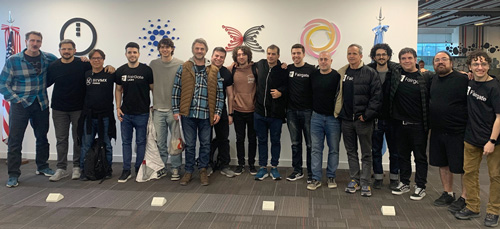
The progress made in 2025 sets the stage for an even more transformative year ahead. As the Bitcoin ecosystem moves toward enabling Covenants, Fairgate is preparing to explore new constructions that take advantage of programmable UTXO flows.

Fairgate in Buenos Aires Pt 2: Discussing the Future of Bitcoin Scalability
As the Ethereum and Bitcoin communities gathered in Buenos Aires for Devconnect 2025, Fairgate kicked off the week with a packed event dedicated to exploring the future of computation and scalability on Bitcoin.
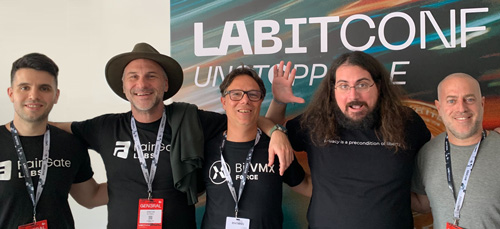
Fairgate in Buenos Aires Pt. 1: Unveiling BitVMX's Potential for Real-World Applications
Beyond the stage, the Fairgate team spent the week connecting with partners, collaborators, and developers from across the ecosystem, exploring new ways to bring programmable, real-world use cases to Bitcoin through BitVMX.
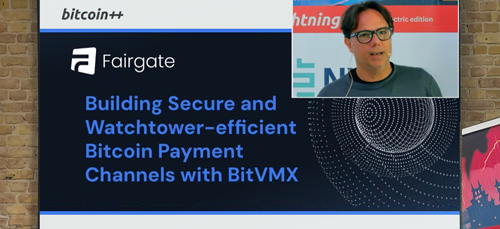
BitVMX FORCE at Bitcoin++ Berlin: Lightning the Path Forward in Bitcoin Infrastructure
At this year’s BTC++ Berlin BitVMX FORCE joined the community to present new ideas and working code for lighting and payment channels, all compatible with Bitcoin’s consensus rules.
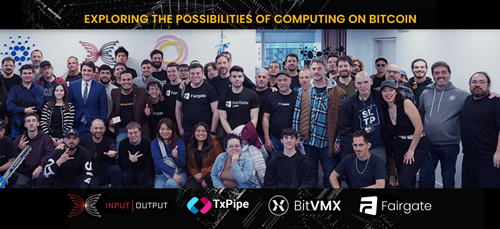
BitVMX, Garbled Circuits and Fairgate’s Ecosystem of Protocols: Buenos Aires Event Recap
The agenda combined foundational talks with forward-looking research, closing with a developer-focused session led by TxPipe.

BitVMX FORCE at btc++ Istanbul: Expanding on Bitcoin’s Scaling Capabilities
Contributors to the BitVMX ecosystem shared recent advancements and experimental directions that expand the boundaries of what’s possible to build on Bitcoin without changes to its consensus.
A Vulnerability on Bitcoin Protocols Using One-Time Signatures
We discovered a vulnerability that can be exploited by a malicious party to steal funds by forcing a timeout, especially in turn-based protocols.

Building together: BitVMX makes a new push into the Open - Source
We’re excited to announce that BitVMX has already began the process of open-sourcing a second wave of core components.
On the security of RSA-based garbling schemes
BitVM3 design proposed an RSA-based garbling scheme. Here, we share our discoveries.

Union Bridge: A Trust-Minimized Bitcoin Bridge
Existing solutions to bridging Bitcoin with other networks often rely on centralized intermediaries, exposing users to counterparty risks and censorship concerns. At Fairgate, in collaboration with Rootstock Labs, we set out to tackle this issue by developing the Union Bridge —a trust-minimized bridge, based on BitVMX, between Bitcoin and Rootstock.

Introducing the Transfer of Ownership Protocol
Fresh off our recent side event at Bitcoin Vegas 2025 — where CSO Ariel Futoransky walked a group of developers and researchers through the inner workings of our latest work — we’re excited to share what’s coming next.
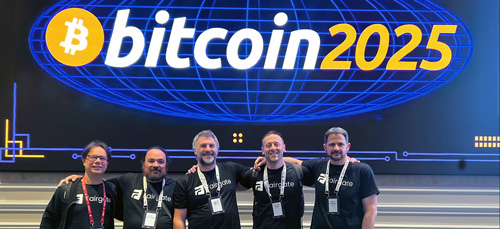
Fairgate at Bitcoin 2025: Bridging the Future of Bitcoin Interoperability
Over three packed days, we unveiled new breakthroughs, forged key partnerships, and engaged directly with the builders shaping the future of Bitcoin programmability and scalability.
Introducing Cardinal: How BitVMX Bridges Bitcoin Ordinals to Cardano, Unlocking Cross-Chain DeFi
A behind-the-scenes look at how Fairgate enabled the first trust-minimized Ordinals movement between Bitcoin and Cardano — and what it means for the future of decentralized finance.

Introducing BitVMX FORCE: Driving the Future of Disputable Computing on Bitcoin
The initiative will support academic research and protocol improvements, aiming to enhance efficiency, security, and decentralization. As Bitcoin becomes more versatile, BitVMX FORCE will explore new methods to leverage upcoming soft-forks, ensuring that the protocol remains adaptable to future innovations.

ESSPI: A Breakthrough in Bitcoin Computation
Bitcoin’s security-first design limited its ability to support advanced applications—until now. ESSPI brings efficient input signing, fraud detection, and smart contract optimization, making Bitcoin computation truly scalable

Wrap Up 2024: A Year of Progress and Excitement
Looking back at 2024, we feel proud and excited. From publishing two foundational whitepapers to enable universal computation bitcoin followed by the creation of BitVMX, we have turned ambitious ideas into reality and we are just getting started.

A Review of the BitVM2-based "Linus24" Bridge
In this article, we apply our four-properties taxonomy (Consensus Validation, Interactivity, Anchor, and Finality) to the recently published BitVM2 Bridge. These findings were shared with the BitVM Alliance but are analyzed here more rigorously using our taxonomy.

Zero Knowledge Proof Verification on Bitcoin
BitVMX is a protocol that allows two parties to execute a program off-chain and the correct execution of this program to be challenged on-chain. This enables the possibility to create Bitcoin transactions where the spend condition can be resolved based on the result of such computation.

The Security Tradeoffs of Validating Bridges
Building a secure bridge is one of the most difficult tasks in the crypto ecosystem. While there have been new developments in Bitcoin bridge designs, such as schemes relying on BitVM2 or BitVMX, the core problem remains the same.

How BitVMX Differs from BitVM
While BitVM is considered to be of theoretical interest, it's impractical for all significant use cases. BitVMX, on the other hand, targets real-use scenarios.